Search

Financial contagion can turn a localized shock into a worldwide crisis. Recognizing its pathways and impacts is essential for investors, policymakers, and institutions seeking to safeguard stability.
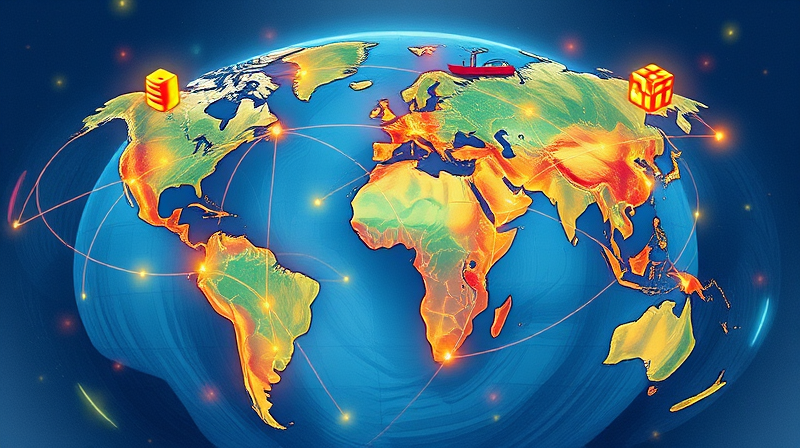
At its core, financial contagion refers to the spread of market disturbances from one region or asset class to others. While interdependence based on shared fundamentals is ordinary, contagion in its narrow sense emerges as a significant spike in correlations during stress periods, beyond what economic ties alone would predict.
This unexpected co-movements phenomenon can undermine confidence and trigger panicked reactions across markets, even when direct economic linkages are limited.
History teaches us that what begins as a small tremor can become a seismic shock:
Such episodes illustrate how a localized event can rapidly become global crises, eroding the benefits of portfolio diversification when assets move in lockstep during downturns.
Financial contagion operates through multiple, overlapping mechanisms that can amplify shocks.
These channels often interact, creating positive feedback loops that magnify the initial shock.
Trade linkages can transmit shocks as exports decline and supply chains stall. Competitive devaluation forces peers to follow suit or face export compression. Meanwhile, liquidity dries up when bid-ask spreads widen and market depth vanishes, compelling sales of even high-quality assets.
Informational contagion hinges on how investors process news. A default or rating downgrade can reveal hidden vulnerabilities, prompting them to update beliefs about similar markets, often overreacting and fueling sell-offs.
Academics and regulators employ various metrics to quantify contagion:
For example, the ECB estimated contagion risk between Japanese stocks and bonds at nearly 9%, almost double the 5% in the US, highlighting regional differences in cross-market linkages.
While contagion cannot be entirely avoided, stakeholders can adopt measures to reduce vulnerability:
Policymakers play a critical role. Swap lines between central banks, coordinated liquidity facilities, and harmonized regulations can act as bulwarks against systemic breakdowns. Transparency in interbank exposures and timely information sharing reduce uncertainty and hinder panic.
Moreover, macroprudential policies such as limits on leverage, cross-border lending restrictions, and stress capital surcharges help contain shock transmission across institutions and borders.
In an increasingly interconnected world, the next crisis may arise from unexpected corners—cyber shocks, climate events, or novel asset bubbles. Embedding contagion risk analysis into both policy frameworks and portfolio construction ensures decision-makers remain vigilant.
By understanding the mechanisms of contagion and learning from past case studies, investors and regulators can better anticipate how shocks might propagate. This knowledge empowers them to architect safeguards that not only dampen immediate losses but also preserve long-term financial stability.
Ultimately, mitigating contagion risk is about creating a more robust financial system—one that resists the domino effect of panic and sustains confidence even in turbulent times.
References