
Search
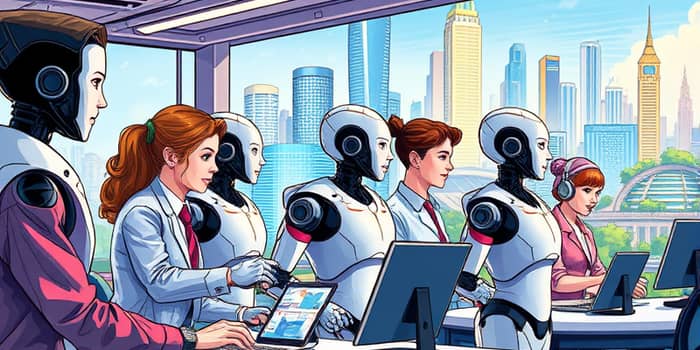
As technology advances at an unprecedented pace, the nature of work is evolving. Automation and artificial intelligence (AI) are reshaping jobs across sectors, promising both disruption and opportunity. Understanding these shifts is essential to prepare workers, firms, and policymakers for the coming decades.
Over the past two centuries, waves of mechanization have transformed agriculture, manufacturing, and services. Contrary to the classic Luddite fear of permanent mass unemployment, historical data reveal that total employment has grown alongside productivity.
Yet aggregate job growth masks significant distributional effects. Regions, industries, and demographic groups can experience severe disruption even as economies expand overall.
Traditional automation excelled at repetitive physical tasks on factory floors. Today’s AI systems, especially generative AI, extend into cognitive realms—writing, coding, design, and decision support.
Replicates and extends cognitive functions by analyzing vast datasets, generating creative content, and offering real-time insights.
Surprisingly, many white-collar professions face elevated risk. Research shows that roles in management consulting, graphic design, and administrative support are among those most exposed. Complex tasks once deemed safe—drafting legal documents, composing marketing copy, even preliminary medical diagnoses—can now be partly automated.
Automation often targets specific tasks rather than entire jobs. Studies estimate that roughly half of all work tasks could be automated, but complete job displacement remains lower as roles adapt and reconfigure.
Autor and Thompson’s analysis of U.S. occupations from 1980 to 2018 reveals nuanced wage effects:
Understanding which tasks are automated is vital: it determines whether workers gain from higher wages or face deskilling pressures.
In the short term, automation can accelerate job losses. During the COVID-19 pandemic, for instance, sectors like retail and customer service saw rapid adoption of self-service kiosks and chatbots. Estimates suggest that 32–42% of jobs lost in that period may not return due to automation.
Yet history teaches that new opportunities emerge. As firms integrate AI, they create roles for data scientists, AI engineers, and infrastructure technicians. By 2030, the U.S. power sector alone may gain 500,000 jobs building and maintaining data centers.
Automation’s wage impacts are uneven. When simple tasks vanish, wages in the remaining specialized occupations can rise by up to 40%. Conversely, deskilling expert roles can depress pay by over 10%.
This dynamic contributes to occupational polarization: high-skill, high-pay jobs on one end and low-skill service roles on the other, with the middle hollowed out. Income inequality may widen unless proactive measures address skill mismatches and geographic divides.
Different industries face varied timelines and risks:
Frontline roles in physical labor remain less exposed initially, but advances in robotics may alter that balance. The pace of adoption depends on firm size, regulatory environment, and cultural attitudes toward technology.
To ensure automation benefits are widely shared, coordinated policy responses are essential. Key strategies include:
Ethical dimensions also demand attention. AI systems can reinforce biases or concentrate power among tech giants. Transparent algorithms, accountable governance, and community engagement are vital to building trust.
Geographically, rural and post-industrial regions may lag in adoption, risking further economic divergence. Targeted investments in digital infrastructure can help bridge these divides.
Automation is neither an unstoppable doom nor a guaranteed boon. It represents a profound transformation that challenges societies to adapt. By embracing innovation while safeguarding workers’ interests, we can harness AI’s promise for shared prosperity.
Policymakers, educators, and businesses must collaborate to shape a future where technology augments human potential, rather than replaces it. Investments in lifelong learning, inclusive economic policies, and ethical AI frameworks will determine whether we achieve broad-based gains.
The history of technology shows that while change can be disruptive, human ingenuity prevails. With foresight and collective effort, the future of work can be a story of opportunity, resilience, and dignity for all.
References