Search
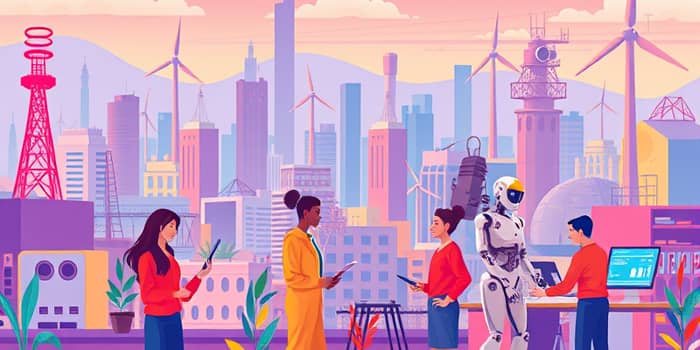
The landscape of work is being reshaped by groundbreaking forces that intertwine technology, demographics, and evolving employment models. Understanding these trends is crucial for policymakers, businesses, and workers alike as we navigate toward 2030 and beyond.
We stand at a crossroads where multiple transformative factors converge to redefine the global labor market. Technological innovation—from AI and robotics to cloud computing and big data—acts as a productivity shock comparable to past industrial revolutions. Simultaneously, the green transition toward renewables, geopolitical realignment of supply chains, and demographic shifts such as aging workforces and youth bulges are creating new economic dynamics.
Post-COVID organizational changes, including remote and hybrid models, further accelerate digitalization and spatial redistribution of jobs. The interplay of these forces can drive both job destruction and creation, altering required skills and reshaping where work occurs. Recognizing this complexity is the first step toward harnessing opportunities and mitigating risks.
According to IMF analysis, 40% of global employment is exposed to AI-driven change, with advanced economies facing up to 60% exposure, emerging markets 40%, and low-income countries 26%. In advanced regions, roughly half of these roles will benefit from higher wages and productivity through AI integration, while the other half risk task automation and job displacement.
MIT Sloan research indicates that AI affects tasks within occupations more than entire job categories. When AI takes over most tasks, employment in those roles drops by about 14% over five years; when AI assists in select tasks, jobs often expand as workers focus on complex creative and interpersonal responsibilities. Firms adopting AI at scale report 6% higher employment growth and 9.5% higher sales growth over five years, underscoring the technology’s dual potential to boost productivity and reshape workforce composition.
Remote and hybrid work have grown from emergency measures to permanent features of the labor market. In the US, 56% of non-self-employed workers could theoretically work from home; today, 14% do so fully, and 53% follow hybrid schedules. Managers report up to 79% productivity gains among remote teams, while companies save an average of $11,000 per remote employee annually through reduced office costs and turnover.
For workers, remote roles cut commuting expenses by about $4,000 per year and enhance work–life balance. They also democratize high-paying opportunities, enabling talent in smaller cities and rural areas to tap into global markets. This spatial rebalancing can revitalize local economies and drive investment in digital infrastructure.
The World Economic Forum projects that by 2028, 92 million jobs may vanish while 170 million new roles emerge, reflecting a significant churn rather than net losses. Technology and the green transition will drive growth in sectors such as AI and data, renewable energy, healthcare, and education.
In the US, the Bureau of Labor Statistics highlights the fastest-growing occupations for 2024–2034:
These roles cluster around tech/data/cybersecurity, green energy, healthcare, and education—areas poised to define the jobs of the future.
To navigate this transformation, coordinated policy action and skills development are essential. Governments and educational institutions must expand vocational training, digital literacy programs, and lifelong learning initiatives. Targeted reskilling efforts can help workers transition between sectors, while incentives for firms to invest in employee upskilling will mitigate displacement risks.
Public policies should also address potential disparities: ensuring equitable access to technology, broadband, and training in underserved communities will curb widening income inequality. Social safety nets—including portable benefits for gig and contract workers—will offer financial stability amid uncertain career paths. Collaborative partnerships between industry, academia, and government can foster innovation while safeguarding worker welfare.
As we progress toward 2030, the future of work presents both promise and challenge. Technological breakthroughs can drive unprecedented productivity and create fulfilling new careers, but only if guided by thoughtful policy and inclusive skill-building strategies. Embracing flexibility, fostering continuous learning, and prioritizing equity will ensure that net gain in roles benefits all segments of society rather than exacerbating divisions.
By understanding the forces at play—AI and automation, remote and hybrid models, demographic shifts, and policy responses—we can chart a path that preserves human dignity, stimulates economic growth, and unlocks opportunities for generations to come. The journey to the future of work is both a collective responsibility and a once-in-a-generation chance to redefine prosperity.
References