Search

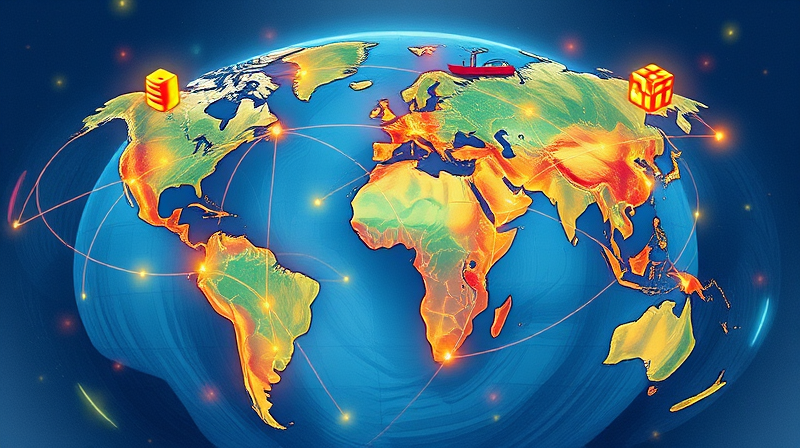
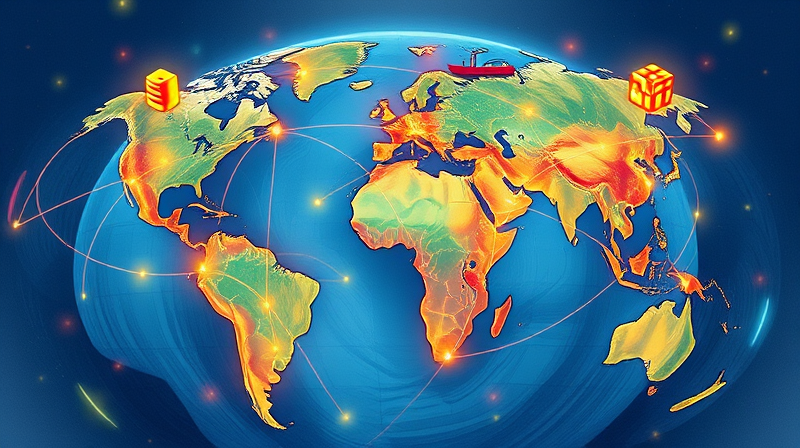
Across the globe, a quiet revolution is reshaping the very foundations of banking and capital flows. What began as a niche experiment on Ethereum is emerging as a formidable, parallel layer of financial infrastructure.
From yield-bearing vaults to peer-to-peer trading, Decentralized Finance is rewriting the rules of money, trust, and inclusion in an increasingly digital world.
Decentralized Finance, or DeFi, refers to a system of financial products and services built on public blockchains—most prominently Ethereum—that operate via self-executing smart contracts instead of centralized banks or brokers.
At its core, DeFi leverages a digitally native, immutable system of record where value exchanges occur in the form of on-chain tokens rather than paper or centralized ledgers.
The World Economic Forum characterizes DeFi by four pillars:
Modern DeFi rests on several technical building blocks: Layer-1 blockchains like Ethereum and Solana, gas-fee tokens, and stablecoins pegged to fiat currencies.
Smart contracts—automated code agreements—replace traditional back-office processes, executing trades, loans, and derivatives when predefined conditions are met.
End users access these services through non-custodial wallets, holding private keys and remaining pseudonymous, with many protocols still operating without formal KYC/AML checks.
Key protocol categories include:
By late 2025, Total Value Locked (TVL) across DeFi protocols exceeded $200 billion, reflecting both retail enthusiasm and growing institutional allocations.
Stablecoin supply surpassed $300 billion, becoming the backbone of on-chain liquidity and cross-border transfers, while DEXs captured just over 21% of all crypto trading volume—a historic high.
Institutional players are no longer on the sidelines. Banks issuing their own stablecoins, asset managers allocating billions to DeFi lenders, and nearly 60% of institutions planning to increase digital asset exposure signal mainstream adoption.
As DeFi scales, regulators and policymakers worldwide are crafting frameworks to balance innovation with consumer protection. In the United States, proposed bills aim to clarify the status of tokens as securities or commodities.
Europe’s Markets in Crypto-Assets (MiCA) regulation, effective in 2026, establishes licensing requirements for issuers and service providers, creating a compliant runway for DeFi integration.
These shifts are driving collaboration between decentralized protocols and traditional institutions. Programmable, transparent smart contracts are increasingly embedded into bank settlement systems, while regulated on-ramps smooth user onboarding.
Between 2024 and 2026, several key trends are reshaping the DeFi landscape. Multichain interoperability—enabled by cross-chain bridges—allows assets to flow seamlessly between Ethereum, Solana, Cosmos, and other networks, reducing congestion and diversifying risk.
Layer-2 scaling solutions like Optimistic Rollups and zk-Rollups cut transaction fees and increase throughput, making DeFi more accessible to retail users in developing economies.
Tokenization of real-world assets—from tokenized bonds to fractionalized real estate—promises to unlock trillions in previously illiquid capital, embedding traditional asset classes within decentralized protocols.
Despite its potential, DeFi carries inherent risks. Smart contract vulnerabilities have led to high-profile exploits and multi-million-dollar losses, underscoring the need for robust code audits and formal verification.
Regulatory clarity remains uneven across jurisdictions, raising questions about cross-border enforcement and consumer recourse. The absence of deposit insurance and formal dispute resolution can leave users exposed to fraud.
Moreover, concentration of governance tokens and liquidity pools in a handful of entities poses centralization risks, challenging the foundational ideal of no single owner, no central closure point.
Looking ahead, DeFi could evolve into a parallel financial layer with deeply integrated TradFi bridges. In one scenario, tokenized equities and bonds trade on-chain 24/7, while algorithmic insurance protocols offer automated coverage against systemic failures.
Alternatively, regulatory fragmentation may spur regional DeFi hubs, each adhering to local compliance regimes but interoperable through standardized cross-chain protocols.
Policymakers will face critical choices: how to foster innovation without sacrificing stability, and how to protect consumers without stifling the ethos of public distributed ledger networks.
Ultimately, the confluence of technology, market demand, and governance will determine whether DeFi becomes the global financial backbone of tomorrow—or remains a powerful but niche alternative.
Decentralized Finance stands at a crossroads, offering unprecedented opportunities for inclusion, efficiency, and transparency. Its trajectory will shape not only markets, but the very nature of money and trust in the digital age.
References