Search
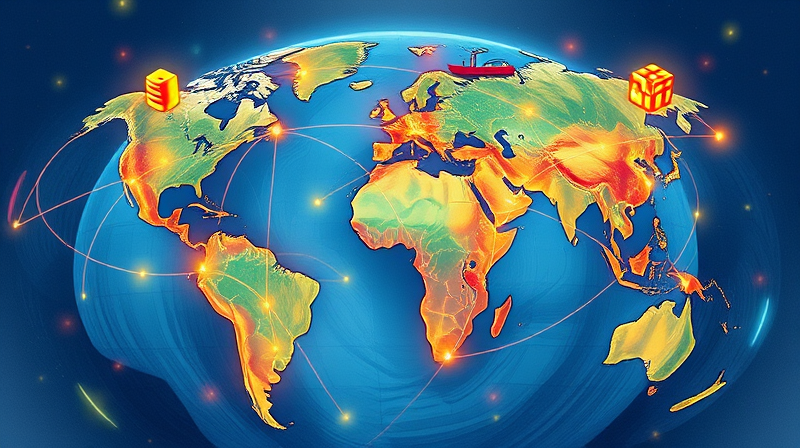
In an era where a single event can ripple across continents, understanding how nations are bound together by commerce, finance, and technology is more vital than ever. This journey explores the essence of global economic interdependence, the pathways through which shocks travel, and practical strategies to fortify resilience without sacrificing cooperation.
At its heart, economic interdependence means that countries, firms, and sectors rely on one another to access goods or services they cannot produce efficiently on their own. Breaking these ties would impose heavy costs, making mutual reliance an enduring reality. This phenomenon is rooted in the division of labour and specialization that defines modern economies.
Several forces have fueled this deepening connectivity. Technological advancements—from containerization to instant digital communication—have slashed coordination costs. Post–World War II trade liberalization under institutions like GATT and the WTO opened borders, while financial integration and the deregulation of capital flows wove nations into a single monetary tapestry. Policy forums such as the IMF and G20 then emerged to guide, stabilize, and sometimes govern these interwoven systems.
Shocks traverse the global economy through distinct but interconnected pathways. Understanding these channels is crucial to anticipating and mitigating disruptions.
Each channel can amplify foreign shocks, but domestic mechanisms—adaptation, adjustment policies, and diversification—often dampen their effects. Yet, when multiple disruptions coincide, even robust systems can strain under the pressure.
History provides vivid case studies of how interdependence magnifies crises and how well-designed responses can restore stability.
The 2008–09 financial crisis demonstrated how a shock originating in one nation’s banking sector can trigger synchronized recessions globally. Equity markets in New York trembled, credit seized, and trade volumes plunged nearly a quarter within months. Policymakers learned that better analytic tools and coordinated fiscal and monetary responses are indispensable.
During the COVID-19 pandemic, simultaneous disruptions to supply chains, labor mobility, and consumer demand revealed both the strengths and vulnerabilities of global networks. While interconnectedness allowed rapid distribution of medical supplies, it also meant that factory closures in one region led to shortages and delays worldwide. This period sparked intense debate over reshoring versus nearshoring strategies and the value of strategic stockpiles.
The 1999 earthquake in Taiwan highlighted another danger: the concentration of critical production capacity in a single locale. As factories halted, key electronics components vanished from global supply chains almost overnight, halting production in distant markets. Analysts concluded that resilience depends less on geographic scope and more on redundancy and diversification across suppliers.
Balancing the benefits of interdependence with the need for stability demands deliberate action. While complete decoupling is impractical and costly, targeted measures can bolster resilience and reduce vulnerability.
Governments and corporations must also weigh distributional consequences. Policies to cushion affected workers and regions can mitigate political backlash against globalization, preserving long-term gains from trade and investment.
Ultimately, the goal is to craft an economic architecture that absorbs shocks gracefully while sustaining innovation, growth, and shared prosperity. This requires a shift from zero-sum thinking—where resilience means isolation—to a cooperative mindset that values mutual safeguards and collective strength.
Global economic interdependence is not a fleeting trend but the bedrock of modern progress. By learning from past disruptions, reinforcing critical links, and fostering inclusive policies, we can navigate future shocks with confidence. The world’s economies may be intertwined, but with foresight and collaboration, they can also be made nearly unbreakable.
References