
Search
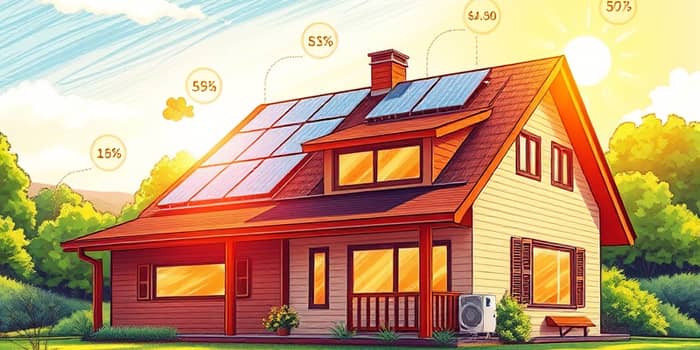
In today’s world of rising utility bills and growing environmental concerns, homeowners have a powerful opportunity to invest in efficiency and unlock substantial long-term savings. By understanding federal and state incentives, you can transform your home, reduce your carbon footprint, and enjoy significant tax benefits.
Policymakers offer tax credits and rebates with clear objectives:
These mechanisms—federal income tax credits, state rebates, and utility programs—encourage homeowners and developers to adopt clean energy systems and upgrades that strengthen our economy and environment.
Effective January 1, 2023, homeowners may claim a 30% credit on qualified expenses for energy-saving improvements. The annual limit is $3,200 per taxpayer, split into two components:
Within the $1,200 portion, homeowners can claim 30% of costs up to specific sublimits. For instance, doors qualify at 30% up to $250 each (max $500), and windows and skylights up to $600 total. A home energy audit yields up to $150. The $2,000 component covers advanced heating and cooling equipment that meets ENERGY STAR or IECC standards.
Key eligibility rules include:
Under Section 25D, homeowners can claim a 30% credit for installing clean energy systems on primary or secondary residences. Qualifying equipment includes:
Originally extended through 2032 by the Inflation Reduction Act, recent legislation ends eligibility after December 31, 2025. Therefore, systems must be operational by the end of 2025 to qualify. Unlike Section 25C, unused credit amounts may be carried forward to future years under 25D rules.
Builders and developers can access the New Energy Efficient Home Credit (IRC Section 45L) for homes acquired January 1, 2023 through June 30, 2026. Depending on performance standards, eligible homes can earn up to $5,000 per single-family unit or up to $2,500 per unit in multi-family buildings.
To qualify, new or substantially reconstructed homes must meet ENERGY STAR or DOE Zero Energy Ready Home requirements. This credit incentivizes the construction of high-performance homes that exceed code and deliver lasting energy savings to buyers.
Homeowners in Colorado enjoy additional benefits that stack with federal credits. Examples include:
By combining federal and local programs, Colorado residents can often cover more than half of upgrade costs, maximizing return on investment.
To take full advantage of these incentives, follow these practical steps:
Key concepts to remember:
Tax credit vs. deduction: A credit reduces your tax bill dollar-for-dollar, while a deduction lowers taxable income.
Nonrefundable credit cannot exceed liability: Plan projects so you have enough tax liability to absorb the credit.
Interaction with rebates: Subtract rebates from costs before calculating the credit to avoid double benefits.
Energy tax incentives evolve with legislation. While some credits expire at the end of 2025, others may be extended or modified. To stay ahead:
By understanding available credits and coordinating with local programs, homeowners and builders can accelerate energy savings and contribute to a cleaner future.
Empower your home upgrades today: plan strategically, document thoroughly, and claim every eligible dollar before deadlines arrive. The journey to a more comfortable, sustainable, and cost-effective home begins with informed action and smart investment.
References