Search
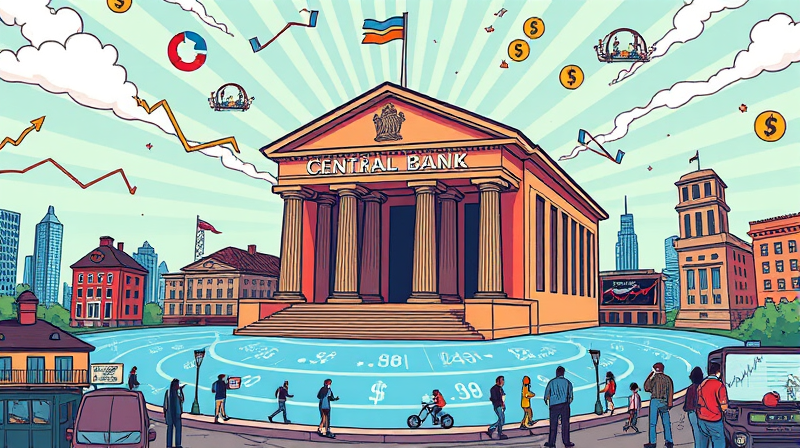
Artificial intelligence is transforming every corner of the financial world, pushing institutions into new realms of efficiency, insight, and innovation.
Over the past decade, AI has evolved from experimental pilots to a measurable, auditable infrastructure in financial operations. What was once a novelty is now considered a core technology in banking and insurance, reshaping everything from customer service to risk management.
As regulators strive to keep pace with agentic systems and generative models, institutions are under pressure to deliver tangible returns, robust governance, and transparent processes.
Financial AI rests on a foundation of advanced capabilities and a modern infrastructure. Success depends on high-quality well-governed data pipelines and scalable platforms that support rapid experimentation and deployment.
Cloud platforms accelerate these capabilities, offering secure model training environments, real-time data pipelines, and audit-ready logging for stringent compliance requirements.
From retail banks to hedge funds, AI use cases span the entire spectrum of financial services. Institutions are customizing solutions to their unique needs, driving both customer satisfaction and operational efficiency.
Credit scoring and lending models now evaluate nontraditional data to extend financing to underserved populations. Fraud detection systems continuously learn from transaction data to flag anomalies in near real time. Meanwhile, personalized banking experiences powered by consumption analytics and generative assistants are redefining customer engagement.
In capital markets, AI underpins algorithmic trading and the emerging field of quantamental investing, where machine insights and fundamental research converge to inform strategies. Asset managers leverage AI-driven robo-advisors for portfolio construction, risk profiling, and tax optimization.
Insurance carriers automate underwriting and claims processing with ML models that assess risk using telematics, medical records, and IoT data. At the same time, AI-driven fraud detection mitigates false claims and accelerates reimbursements.
Within corporate finance, AI is redefining FP&A, reporting, and the monthly close cycle. As digital employees take on routine tasks, finance professionals can focus on strategic analysis and stakeholder engagement.
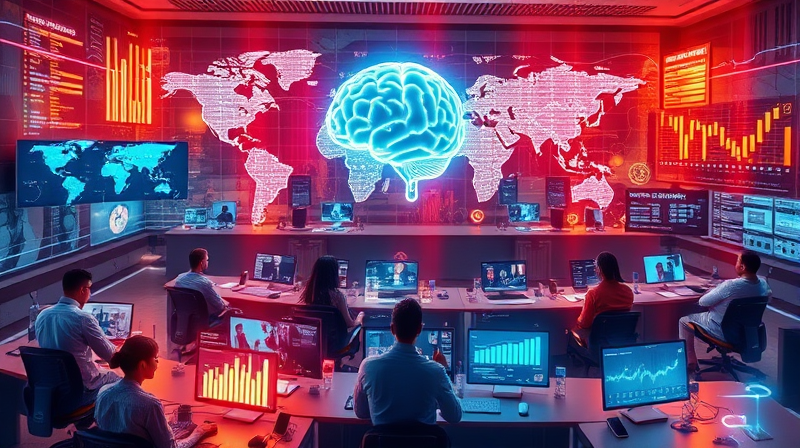
Human and agent workflows are converging: AI ingests data, runs preliminary analyses, and identifies risks, while humans validate outcomes and make final decisions.
Firms that fully embrace AI stand to gain 15-point improvements in efficiency ratios and unlock new revenue streams. Key strategic advantages include:
By harnessing predictive analytics, firms can anticipate liquidity needs, optimize pricing, and tailor products dynamically based on behavior data, turning raw information into competitive differentiation.
As AI systems grow more powerful and agentic, institutions face mounting regulatory scrutiny. Transparency, explainability, and data privacy are paramount. Finance leaders must implement:
Failure to address these areas can lead to operational risks, legal penalties, and reputational harm. Proactive engagement with regulators and cross-functional collaboration ensure that AI adoption is both innovative and responsible.
The coming years will bring new frontiers: fully autonomous trading agents, real-time risk assessment integrated into self-healing infrastructure, and hyper-personalized financial products delivered through digital employees.
Advances in multimodal AI will merge text, image, and voice analysis, unlocking richer customer insights and more intuitive interfaces. Meanwhile, the integration of quantum computing with AI promises breakthroughs in portfolio optimization and risk simulations.
Ultimately, success hinges on aligning AI initiatives with strategic objectives, investing in talent and data governance, and fostering a culture of continuous learning. Institutions that navigate this transition thoughtfully will redefine finance for the digital age.
Artificial intelligence in finance represents both a seismic challenge and an unparalleled opportunity. By embracing change responsibly, organizations can create resilient, intelligent systems that serve stakeholders and society at large.
References