Search
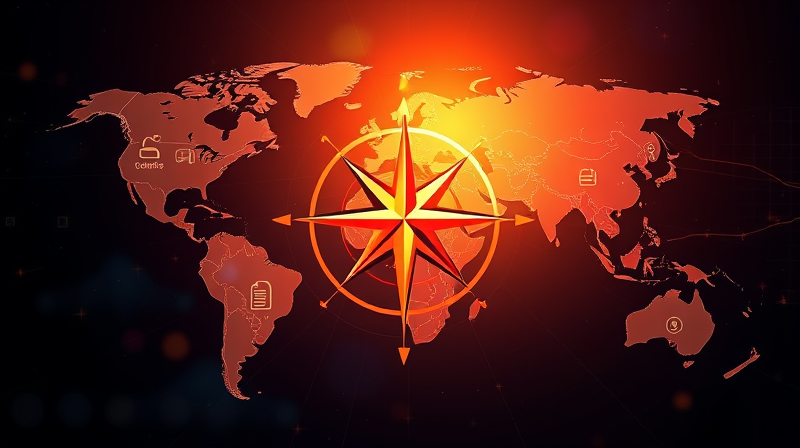
In an era defined by rising economic nationalism and shifting alliances, investors need more than intuition. They require a structured way to interpret global tensions and integrate them into their process. The geopolitical compass is not about predicting every headline, but about using a thoughtful framework to design portfolios that stand firm amid uncertainty.
Geopolitical risk encompasses the complex political, economic, and social relationships that shape international markets. It goes beyond market volatility to capture the threat, realization, and escalation of adverse events such as wars, terrorism, or diplomatic standoffs.
According to MSCI’s broader investment definition, geopolitical risk covers disruptions in international relations that can ripple through trade, capital flows, and supply chains. Even portfolios focused on domestic assets can suffer when global tensions trigger currency swings or disrupt critical inputs.
Geopolitical developments influence markets through numerous channels. Recognizing these mechanisms helps investors isolate the true drivers of change.
For example, the U.S.-China trade war highlighted how sudden tariff hikes can force multinational companies to reroute supply chains at significant cost. Similarly, sanctions on Russian oil and gas after the Ukraine invasion caused energy price spikes that reverberated across global markets.
The year ahead figures to be particularly pivotal. Leading consultancies and forums identify key themes shaping the geopolitical landscape in 2026:
Lazard pinpoints a rise in new economic nationalism and industrial policy, an intensifying EU-China collision over EVs and semiconductors, shifting political tides in Latin America, alliances around critical minerals, and ongoing U.S.-China strategic uncertainty.
EY highlights three core dynamics: the emergence of new rules and norms in trade, the geopolitics of scarcity driving supply-chain security, and engagement across four major regions including Asia-Pacific and the Middle East.
The World Economic Forum warns of an increasingly polycentric world, with more power centers vying for influence, and fragmentation of the global monetary system as countries diversify away from the U.S. dollar.
Geopolitical risk is not uniform across sectors. MSCI research finds that over the past thirty years, high-risk regimes led to lower equity returns and greater forecast volatility, especially in certain industries.
Energy and materials firms are particularly exposed to sanctions and supply bottlenecks, while healthcare and utilities display more resilience. Investors can harness this sector rotation effect to position portfolios defensively when geopolitical tensions rise.
Successful integration of geopolitical insight hinges on clarifying your time horizon. Short-term traders may seize transient shocks for quick gains, but long-term investors should focus on structural regime changes that alter growth trajectories.
JPMorgan’s private bank notes that geopolitical events rarely change the fundamental long-term outlook for large-cap equities, though they can have significant local market impacts. Separating fleeting volatility from durable shifts is essential.
Portfolio diversification remains the first line of defense against geopolitical upheaval. Spreading exposure across geographies, industries, and asset classes helps absorb localized shocks.
By diversifying thoughtfully, investors can insure portfolios against unexpected policy shifts, trade restrictions, or military conflicts.
Not every diplomatic dispute or headline-grabbing incident warrants portfolio overhaul. Minor policy tweaks or short-lived tensions often produce temporary market blips.
Focus instead on events that reshape fundamentals—such as a major trade pact unraveling or durable protectionist measures. Anchoring decisions to a clear geopolitical compass prevents overreaction.
In today’s fragmented world, geopolitics is a persistent factor that shapes costs, flows, and risks across markets. Treat it as a strategic input rather than a daily trading signal.
By building diversified, resilient portfolios, conducting regular scenario analysis, and distinguishing noise from structural shifts, investors can navigate uncertainty with confidence. The geopolitical compass provides the guidance needed to align investment decisions with the evolving global landscape.
References