Search
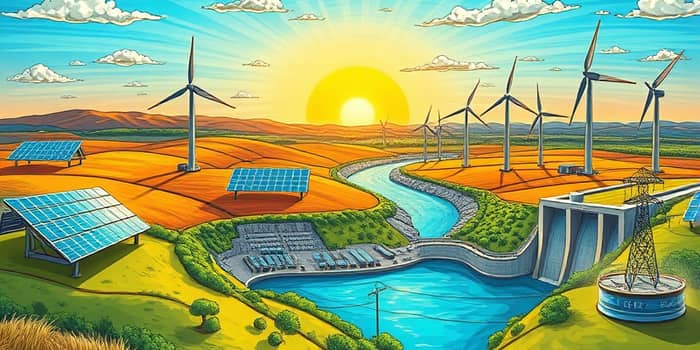
The global energy system is undergoing an unprecedented transformation. As demand surges and the cost of clean technologies plummets, the market is shifting far beyond the realm of coal, oil, and gas. This article examines the forces driving record clean-energy investment and reshaping how we generate, store, and consume power worldwide.
In 2024, more than 90% of new electricity capacity installed around the world came from renewables such as solar, wind, hydro, and geothermal. This remarkable figure underlines how rapid renewable deployment has moved from niche projects to the mainstream of energy markets.
Global spending on clean energy topped fossil-fuel investment for a full decade, reaching a total of $2.2 trillion in 2025 out of $3.3 trillion in overall energy investment. Although the year-on-year growth rate in clean-energy funding eased from 17% in 2022 to 6% in 2025, the scale of investment remains historic.
Today, renewables account for nearly 30% of global electricity generation, up from just over 25% a few years earlier. Projections suggest that by 2030, wind and solar could supply more than 60% of the world’s electricity, and total renewable output might exceed 17,000 terawatt-hours—an 90% increase from 2023 levels.
Despite the headway in renewable power, fossil fuels still underpin the energy mix in many regions. In 2023, petroleum remained the most-consumed fuel in the United States, with oil, coal, and gas together accounting for nearly 83% of total energy consumption.
However, the share of fossil-fuel generation is eroding. U.S. coal and gas output fell by 103 million MWh between 2019 and 2026, while utility-scale wind and solar generation jumped by nearly 299 million MWh over the same period. In 2024, renewables outpaced coal on 294 days, compared with just 38 days in 2019.
The contrast between the power sector and the broader energy system is striking. Electricity is decarbonizing faster, yet heating, transport, and industry remain heavily reliant on fossil fuels. Bridging this gap will require policy innovation and infrastructure build-out on an unprecedented scale.
As renewable capacity soars, the challenge shifts from generation cost to system integration. Transmission and distribution networks must expand and modernize to handle rising electricity demand and variable output from solar and wind installations.
Battery storage has emerged as a critical component. In the United States, installed storage capacity soared past 30,000 MW by the end of 2024, with another 15,000 MW expected by 2025. California alone boasted over 13,300 MW of storage, including 11,462 MW of utility-scale batteries.
Key barriers to infrastructure deployment include permitting delays, regulatory complexity, and supply-chain bottlenecks. Addressing these will be vital to ensuring that clean energy can be delivered reliably and affordably.
The clean-energy sector is not only decarbonizing power—it is also driving job creation. Employment in renewable energy rose from 30 million in 2019 to approximately 35 million in 2023, surpassing fossil-fuel jobs for the first time.
The United Nations reports that renewable energy generates three times as many jobs per dollar invested compared with fossil fuels. Under existing policies, the sector could add 10 million more positions by 2030, even as the fossil-fuel workforce contracts by around 3 million.
Cost competitiveness has become a cornerstone of the energy transition, but policy frameworks remain essential. Stable regulations, carbon pricing, and targeted incentives have accelerated deployment in many markets. Conversely, policy uncertainty can stall projects and undermine investor confidence.
Geopolitical tensions and supply-chain disruptions add another layer of complexity. Critical minerals needed for batteries, solar panels, and electric vehicles often come from concentrated sources. Diversifying supply chains and investing in domestic manufacturing are now strategic priorities for many countries.
Despite these challenges, the overarching trend is clear: the energy market is evolving beyond traditional fuels. With electrification touching every sector—from transport to industry—the future belongs to systems that can integrate clean generation, advanced storage, and resilient infrastructure.
As we approach 2030, stakeholders must work in concert to streamline permitting, scale up grid investment, and develop the skilled workforce needed for this new era. In doing so, we can achieve a more secure, equitable, and sustainable energy future—one that transcends the limitations of the post-industrial age and powers the world of tomorrow.
References