
Search
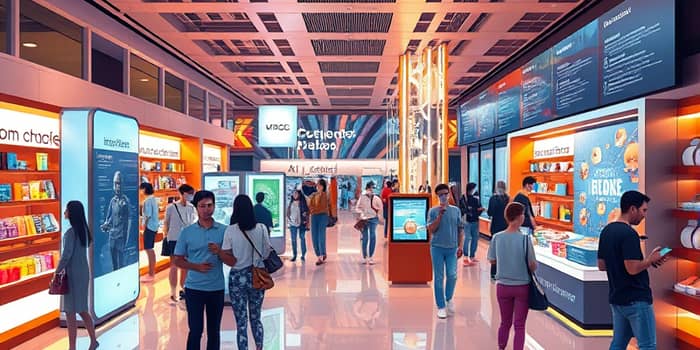
As global markets evolve under economic pressure and technological breakthroughs, the retail industry stands at a pivotal crossroads. Far from collapsing, retailers today are in the midst of a structural transformation that redefines value, experience, and resilience. By embracing data, artificial intelligence, and innovative formats, retailers can not only survive but thrive in this new era of consumer empowerment.
Inflation, regional dynamics, and secular shifts in spending are reshaping the retail landscape. Although global inflation is forecast to ease to 4.2% in 2025, price levels remain elevated, compelling consumers to reevaluate every purchase. Constrained expenses on food, housing, and healthcare continue to erode disposable income, yet overall consumption has stayed surprisingly resilient since 2022.
Retailers face uneven regional patterns: food price inflation is still high in Europe and Asia-Pacific, while the U.S. sees a modest easing. These variations demand localized pricing and assortment strategies rather than one-size-fits-all solutions. At the same time, consumers are shifting dollars from durable goods to experiences—dining, travel, wellness—fueling growth in services even as material spending moderates.
Today’s consumer is far from bargain-hunting alone; they are quality-driven and value-conscious. Nearly four in ten shoppers are increasingly cost-aware, but demand more than just low prices—they seek fair pricing combined with convenience, sustainability, and memorable experiences.
Spending on experiences continues to outpace material goods. Retail visits have become moments over merchandise, with shoppers flocking to stores for discovery, social interaction, and brand storytelling. Commodities like socks and basic kitchenware are ordered online, while physical venues serve as stages for immersive, “phygital” encounters.
Brand loyalty is no longer guaranteed: transparent pricing, easy comparisons, and frictionless digital journeys empower consumers to switch retailers at will. To counter rising fickleness, retailers must leverage unified data and authentic personalization, transforming loyalty programs into emotional bonds fueled by relevance and community.
Artificial intelligence has graduated from pilot projects to the core of retail operations. No longer a luxury, AI now powers pricing engines, demand forecasting, in-store automation, and personalized marketing. In a recent survey, 94% of retail executives plan to bring marketing activities in-house, fueled by AI-driven insights.
AI’s impact spans the value chain, from hyper-personalized offers to real-time supply chain orchestration. Companies are using deep learning for markdown optimization, intelligent replenishment, and dynamic segmentation. Robots in distribution centers and stores handle repetitive tasks, freeing human staff to focus on high-touch service.
These capabilities are no longer optional. Retailers who integrate AI across merchandising, customer engagement, and logistics gain a decisive edge in cost control and customer satisfaction.
The boundary between online and offline has all but disappeared. While 96% of Americans shop online in some form, 65% of spending still occurs in physical stores. True omnichannel requires unified customer profiles, unsiloed data, and seamless journeys—browse online, buy in-store; discover in-store, buy online; return anywhere.
Physical stores are reinventing themselves as experience hubs, fulfillment centers, and service points. From in-store events and AI-driven gamification to buy-online-pickup-in-store (BOPIS) and same-day delivery, retailers are making every location a multifaceted touchpoint.
Recent disruptions have highlighted the fragility of global supply chains. Trade tensions, tariffs, port congestion, and labor shortages drive delays and higher costs. Retailers are responding with diversified sourcing strategies, nearshoring initiatives, and partner ecosystems that enhance agility.
Inventory planning has become an art and a science. Balancing availability with carrying costs demands advanced analytics and AI-driven forecasting. Too much stock ties up capital; too little erodes customer trust. Real-time visibility platforms provide alerts for disruptions and recommended adjustments to routing and order volumes.
Nearly 95% of executives expect supply chain costs to rise in 2026, making resilience a top priority. Automation, robotics, and digital twins help simulate scenarios and optimize decisions, ensuring that operations can withstand shocks while maintaining service levels.
As the retail sector adapts to new realities, leaders can turn challenges into opportunities by focusing on five key actions. First, embed AI throughout the organization—
Second, reimagine store formats as community and experience centers rather than mere transaction points. Third, develop localized pricing and assortment models backed by real-time data. Fourth, foster emotional loyalty through purposeful brand narratives and immersive events. Finally, redesign supply chains for speed and resilience, leveraging automation and diversified sourcing.
By weaving together technology, human creativity, and operational excellence, retailers can meet evolving consumer expectations and chart a path toward sustainable growth. The reinvention of retail is not a one-time project but a continuous journey of adaptation, innovation, and human connection.
References