
Search
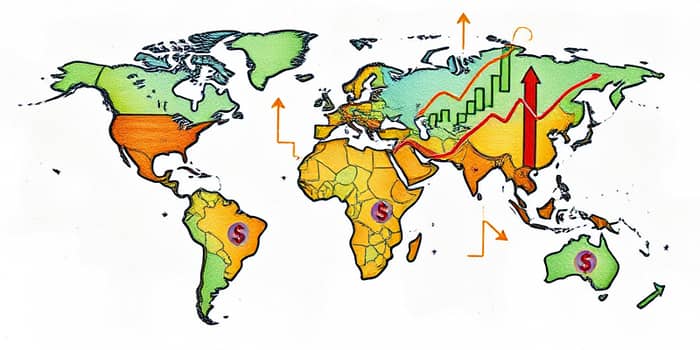
International investing can unlock growth and diversification by allocating capital beyond national borders. This journey offers access to thousands of assets, unique market dynamics, and long-term opportunities that domestic markets alone cannot provide.
At the core, international investing goes beyond borders by focusing on assets outside your home country. For a U.S. investor, this includes non-U.S. stocks, bonds, mutual funds, real estate, and alternative securities. In contrast, domestic investing remains within familiar national boundaries, limiting exposure to local economic cycles and regulatory frameworks.
Understanding the difference between global and international funds is vital. Many investors conflate these terms, assuming any foreign exposure counts as international. However, global funds often hold a significant share of U.S. companies, which may dilute the intended diversification. Examining a fund’s prospectus for geographic mandates and currency policies can clarify whether an investment truly expands your international footprint.
Diversification remains the bedrock of prudent investing. By adding uncorrelated assets, investors can smooth portfolio volatility across cycles and reduce reliance on a single economic engine. For example, during periods when U.S. equities underperform, international or emerging market stocks often lead global returns.
At the same time, international markets offer access to a vastly larger opportunity set. Overseas, there are nearly six times as many publicly traded companies as in the United States, and over half of global equity market capitalization resides outside U.S. shores. This opens doors to sectors and companies that domestic indices may overlook.
Academic research underscores these benefits. A Kellogg study analyzing data from 27 countries found that combining U.S. with selected foreign stocks produced significantly higher risk-adjusted returns than U.S.-only portfolios, with Sharpe ratio improvements up to 400%. This evidence highlights the mathematical foundation underlying international diversification, even in a globalized era of rising correlations.
Allocating capital abroad requires careful calibration. Industry leaders suggest benchmarks: Vanguard recommends at least 20% of both stock and bond allocations be international, with a “full diversification” target around 40% of equities and 30% of bonds overseas. Charles Schwab offers a broader range, suggesting 5% to 40% for equity, depending on your risk profile and objectives.
Many investors exhibit home bias that limits global reach, overweighting familiar domestic markets relative to global market cap. Starting with a neutral global market-cap allocation, then adjusting for risk tolerance, liquidity needs, and thematic views can help overcome this bias and ensure balanced exposure.
Another approach uses global market-cap weighting as a neutral starting point. Currently, non-U.S. equities represent roughly half of world market capitalization. Investors can then adjust this baseline for personal factors, such as risk appetite, tax considerations, or thematic convictions like technology, renewable energy, or consumer trends in specific regions.
Behavioral dynamics play a role: after nearly 15 years of U.S. outperformance, international markets regained leadership in 2025, reminding investors that regimes can shift without warning and underlining the importance of staying globally diversified.
International investing introduces additional risk layers, chief among them currency fluctuations. When the home currency strengthens, foreign returns translate into lower domestic returns. Conversely, a weakening home currency can amplify foreign gains. Deciding to hedge currency exposure or remain unhedged is pivotal. Hedging reduces volatility but incurs costs and may limit upside when the home currency declines.
Additional layers of risk include varying accounting standards, corporate governance practices, and market liquidity constraints. In some emerging markets, trading can be halted unexpectedly, or dividend policies may shift suddenly. Investors should maintain a buffer of liquidity and avoid overconcentration in small or thinly traded positions that may be difficult to exit during periods of stress.
Political, economic, and regulatory landscapes also vary widely. Emerging markets can deliver rapid growth amid structural challenges such as fluctuating policies, social unrest, or capital controls. Investors must assess country-specific risks, maintain robust research, and often partner with experienced managers to navigate these complex environments.
Within international investing, distinct categories cater to different objectives:
Asset classes multiply the options further. International equities may come in the form of direct shares, American Depositary Receipts, or regional ETFs. Fixed income spans local-currency sovereign and corporate bonds as well as hard-currency issues, each with unique yield and credit profiles. Real estate and infrastructure investments via global REITs and specialized funds add another dimension to a truly diversified overseas strategy.
Building a robust international portfolio begins with defining your investment objectives, time horizon, and risk tolerance. Research and select suitable vehicles—whether low-cost ETFs, mutual funds, or direct holdings. Keep costs and tax considerations in mind, as foreign withholding taxes and local regulations can impact net returns.
Regular monitoring and disciplined rebalancing ensure your allocations stay aligned with goals. Incorporate a mix of hedged and unhedged exposures based on your currency outlook, and consider tactical tilts for regions or sectors where valuations appear attractive. Successful investors remain agile, ready to rebalance when market shifts disrupt target weights.
Ultimately, international investing is not about chasing exotic returns alone, but about crafting a resilient, diversified portfolio that harnesses the full spectrum of global growth potential. By understanding terminology, balancing allocations, mapping risks, and employing disciplined execution, investors can turn the world into their opportunity set and confidently pursue long-term financial success.
Embracing the nuances of international investing can lead to profound benefits: smoother volatility, access to rising markets, sector diversification, and a hedge against domestic concentration risk. With thoughtful planning and ongoing diligence, your portfolio can capture the dynamism of global economies, delivering richer outcomes and greater peace of mind in an interconnected world.
References