Search

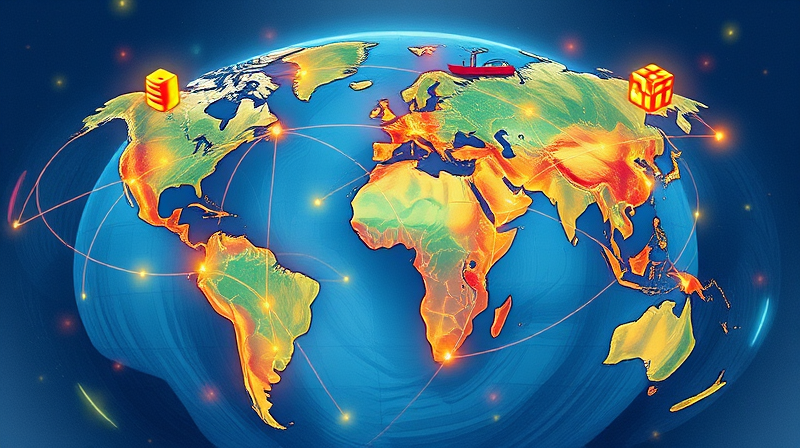
The global trading landscape is undergoing a profound transformation. What once seemed an ever-expanding frontier of opportunity is now marked by friction, fragmentation, and uncertainty. Supply chains stretch across continents, yet political tensions, security concerns, and economic nationalism are reshaping the routes goods travel.
This article delves into the roots of these tectonic shifts, offering both a panoramic view of emerging trends and practical guidance for businesses and policymakers. By understanding the forces at play and embracing adaptability, stakeholders can not only survive but also thrive in this dynamic environment.
Over the past decade, trade growth has decelerated from pre-2010 averages of 3–5% annually to roughly 1% in 2025, with a modest rebound to around 2% in 2026, according to Atradius forecasts. The WTO’s even more cautious outlook—projecting only 0.5% growth for 2025—underscores how closely trade now shadows global GDP expansion.
Despite these headwinds, nearly 80% of world trade still operates under existing rules and agreements. Yet, the bedrock of predictability is eroding as nations deploy tariffs and restrictions in unprecedented numbers. UNCTAD reports discriminatory measures at record highs, highlighting record levels of trade policy uncertainty that ripple through supply chains and investment decisions.
For businesses, the challenge is clear: map these shifting patterns and build resilience before the next policy shock arrives. Strategies that succeeded a decade ago may now falter under the weight of geopolitical fragmentation.
The accelerating rivalry between the world’s largest economies has ushered in what some describe as an accelerating shift toward a multipolar trade order. The US–China dispute extends beyond tariffs, encompassing export curbs on semiconductors, rare earths, and advanced technologies. Conflicts in Ukraine and the Middle East further stoke uncertainty, with energy and food supplies caught in the crossfire.
National security concerns have become a central pillar of policy. Governments invoke “emergency” tariffs under Section 232 in the US, while the EU tightens controls on AI and biotech. Foreign direct investment is screened through stringent gates, and export licensing regimes in critical sectors multiply. These measures, framed as safeguards, often serve broader industrial objectives, challenging the principle of free market access.
Domestically, the rise of populist narratives exploits anxieties over jobs, inequality, and deindustrialization. Brookings Institute data reveal that between January 2017 and 2019, governments enacted 6,755 changes to trade, investment, and migration policies. Protectionist acts surged to over 1,000 in 2018, even as liberalizing reforms declined sharply. Such volatility becomes a tool for political signaling, leaving businesses and workers to navigate a constantly shifting legal terrain.
Together, these forces transform trade policy from a mechanism of economic efficiency into an instrument of statecraft and domestic politics, where alliances shift as frequently as market conditions.
The World Trade Organization’s dispute settlement system, once the envy of the global economy, now stands paralyzed. Blocked appointments to its Appellate Body have left governments turning to unilateral reprisals rather than arbitration. In this vacuum, regional blocs and bilateral deals—like RCEP in Asia and CPTPP in the Pacific—gain prominence.
Yet the foundational principles of non-discrimination and market access remain vital. UNCTAD’s March 2026 update calls for a comprehensive reform agenda:
- Restore full functionality of the dispute settlement mechanism.
- Strengthen special and differential treatment for developing economies.
- Modernize core rules to address digital trade, environmental concerns, and supply chain security.
Without these reforms, the risk of fragmentation into hostile blocs grows, particularly with powerful states wielding trade measures as geopolitical levers.
A balanced, rules-based system is not a relic but a necessity. By anchoring policy in predictability and cooperation, governments can unlock inclusive economic growth and development, empowering businesses and communities worldwide.
In a world where tariff announcements can pivot in an instant, foresight and flexibility become competitive advantages. Firms and governments alike must cultivate strategies that anticipate disruption and leverage new opportunities.
Policymakers can reinforce these measures by championing transparent and evidence-based policy making, engaging stakeholders in open consultations, and pursuing agreements that balance security with market openness.
The story of trade is not predetermined. History shows that periods of retrenchment are often followed by waves of innovation and reform. To chart a path forward, stakeholders must rally around shared goals.
Amid these tides of change, the human element remains central. Workers, entrepreneurs, and families across all continents depend on stable trade flows to build livelihoods, support education, and fight poverty. This shared stake in the global marketplace underscores the moral imperative to preserve open channels of commerce.
By embracing cooperation over confrontation, we can transform the current turbulence into a catalyst for progress. Leaders at every level must act with purpose: businesses investing in innovation, governments reinforcing transparent governance, and civil society holding all actors accountable.
Now is the time to turn uncertainty into an opportunity to rebuild a trading system rooted in fairness, shared prosperity, and security. The choices we make today will echo across generations, shaping a world where trade remains a force for good, connecting nations and uplifting communities.
References